Showing posts with label drugs. Show all posts

Monday, June 5, 2023

[Keynote] 16th Annual Conference - International Society for the Study of Drug Policy (ISSDP), Leuven, Belgium

On June 1, 2023, I delivered the closing keynote for the 16th Annual Conference of the International Society for the Study of Drug Policy (ISSDP) in Leuven, Belgium, as the inaugural winner of ISSDP's "Excellence in Research Award". In my lecture entitled "Between global and local: Drug policy reflections from Southeast Asia" and held on the last day of the three-day conference, I talked about the Philippine drug policy situation, the emergence of drugs as populist tropes in the region, as well as regional influences and their roles in drug policy. 

The paper that was the basis of my lecture can be found here.

Tuesday, November 23, 2021

[Book Launch] Drugs and Philippine Society - Part I

On November 24, 2021, we held an online book launch for Drugs and Philippine Society (Ateneo de Manila Press, 2021), the collection of critical essays that look at drug use; drug wars; and drug policies in the Philippines from different angles. It was a privilege for me to have edited and written the critical introduction to this volume, which features the perspectives of scholars; social and cultural workers; artists and activists present and past.

The book launch featured Filomin Gutierrez, Mary Racelis, and Ica Fernandez, all of whom contributed important chapters in the volume, particularly focusing on “interrogating the drug war” (also the title of the second part of the book). All three asserted the importance of eliciting the perspectives and positionalities involved in the drug war, from police officers to people’s organizations and of course the people themselves who are living in communities affected the most by the so-called war.

Friday, October 25, 2019

[Presentation] 1st Asia Regional Meeting ISSDP - Drugs as a populist trope in Asia

At the 1st Asia Regional Meeting of the International Society for the Study of Drug Policy (ISSDP) on October 14-15, 2019, I  presented a paper reflecting on the ways in which drugs are mobilized as populist tropes in four Asian countries - the Philippines, Indonesia, Bangladesh, and Thailand - drawing from historical and contemporary examples.

The conference was the first of its kind in Asia and was a significant step in bringing together researchers (and advocates) in the region, given the many region-specific concerns, not least of which are punitive drug policies. Earlier this year, Dr. Claudia Stoicescu and I co-wrote a civil society report for the International Drug Policy Consortium summarizing the major developments in the region over the past decade.


Wednesday, May 1, 2019

[Presentation] Columbia University, New York - Interrogating the Philippine 'Drug War'

On April 22-23, 2019, I joined a conference at the Columbia Journalism School in New York City entitled "Violence and Policing in the Philippines, Latin America, and the U.S.", where I presented some insights from historical and ethnographic studies of drugs in the Philippines.

As in previous presentations, I reiterated three main points: First, that Duterte is best seen as a continuation or escalation - not an exception - to Philippine drug policy: one that views drugs as ‘evil’ and sanctions punitive measures; second, the ethnographic picture shows that drugs are ‘useful’ in the everyday lives of young people and therefore any response must consider their socio-economic situations. 

Finally, drawing on my own research, I highlighted how anxiety and fear characterize young people’s outlooks: they view law enforcement as unfair, corrupt, and hypocritical. 

The conference offered various perspectives from Colombia, Mexico, Brazil, US - as well as various voices from the Philippines. Hopefully, a kind of engagement that finds value in Philippines-Latin America comparisons and collaborations will continue. And so will the work that documents and challenges the violent drug policies in the Philippines as well as the conditions that enable them. 


Monday, November 26, 2018

[Presentation] 4th Philippine Studies Conference in Japan, Hiroshima - Living with ‘tokhang’

During the 4th Philippine Studies Conference in Hiroshima, Japan on November 2018, I organized a panel entitled The Philippine War on Drugs: Critical Perspectives. In this panel, Filomin C. Gutierrez (Department of Sociology, University of the Philippines, Diliman) gave a presentation about the "Experiences of Persons Arrested in Operation Tokhang" while Aaron Abel Mallari (Department of History, University of the Philippines, Diliman) reported the initial insights in our joint research about the "Social constructions of drugs and drug users in contemporary Philippines".

For my part, I presented a paper entitled "Living with ‘tokhang’: Mistrust and fear in a drug war-affected community in the Philippines" based on my research in an urban poor community in Metro Manila where some drug war-related killings have been reported.

Our papers are just among the growing number of works that seek to make sense of and interrogate the Philippine drug war. One important task ahead is to create a community around scholars pursuing this urgent topic - and create venues for public dissemination of their major insights. 

Tuesday, April 24, 2018

[Talk] H. Otley Beyer Museum Talk: Anthropology in the time of 'tokhang'

On April 24, 2018, as part of UP Diliman - Department of Anthropology's H. Otley Beyer Museum Talk Series (i.e. the "Beyer talks"), I presented my reflections about what the anthropology of drug use can do both for drug policy and anthropology as a discipline. I drew from ethnographic research I conducted from 2011-2013 as well a recently-concluded follow-up study in a tokhang-affected community.

In the talk I emphasised that anthropology can help deconstruct both 'drugs' and addiction', interrogate societal perceptions on drugs as well as government rhetoric, understand the lives of drug users, and identify hidden populations - towards informing drug policies and programs.

Thank you to Prof. Edwin Valientes of the Anthropology Department for organising the activity, and to everyone who attended! Hopefully events like this can encourage more academics to pursue an urgent topic in which our voices are crucial, both for the present and the future.

Thursday, June 29, 2017

[Second Opinion] Colombia beyond the drug wars

One of Fernando Botero's sculptures in Medellin (Photo by the author)
by Gideon Lasco
Philippine Daily Inquirer

BOGOTÁ, COLOMBIA — Colombians have a reputation for being friendly, and even before my plane touched down in Bogotá’s El Dorado airport, I was convinced of it. My seatmate, upon discovering that it would be my first time in Colombia, took it upon himself to furnish information about his country. “We have mountains, beaches, historic towns,” he began, listing the attractions of a country that is all at once Pacific and Caribbean, Andean and Amazonian.

“A lot has changed from the 2000s. It’s now completely different,” he said, adding: “For the first time, there is a middle class. Did you know that Colombia is South America’s third largest economy?”

It did not take long for me to experience the middle-class Bogota of which he spoke. The bike lanes, the chic centro comerciales, the well-manicured parques, the branches of Juan Valdez Café with fast internet: All of them hint of an economy that has grown—at least for some segments of the population.

“It’s an exciting time to be in Colombia,” Daniel Buritica, a social entrepreneur, told me, confirming my impressions. “Young people are not bound by old ways of thinking, and are looking ahead.” Last year, Buritica organized a summer camp where he brought together former FARC rebels, paramilitaries, and victims—an attempt to heal the wounds of the conflict. I could sense that his emotions over the conflict run deep, but so is his optimism for the future.

The tension between trying to move on and remembering the past is more palpable in Medellin, a charming highland city where the mere mention of the name Pablo Escobar can still offend locals. For many, he is best relegated to oblivion—not notoriety—even as some continue to view him as a Robin Hood who built football stadiums and helped the poor.

Equally a source of discomfort is a discussion of Colombia’s recent history—and today’s divisive politics. One major point of contention is how to deal with the FARC: A referendum last year was defeated by a hair, but President Juan Manuel Santos has persisted with a fragile peace deal. Meanwhile, Alvaro Uribe, the iron-fisted ex-president, wants a tougher stance. He remains popular, and many are convinced of his view that Colombia is becoming the next Venezuela. As in the Philippines, social media is rife with fake news.

Perhaps the only thing that can rival politics in provoking people’s passions is football, but it is nowhere near as polarizing. While cities contest their La Liga with ferocious intensity, a national football team—currently ranked by Fida as fifth in the world—brings them together, and the likes of James Rodriguez and Radamel Falcao are sources of pride.

Visiting Colombia’s museums and reading its critical histories, one can find its history of colonization and exploitation depressing; even the distinctive art of Fernando Botero cannot hide the violencia of the past, both remote and recent. Atop Bogota’s Montserrate or aboard Medellin’s cable cars, one cannot deny the visible and enduring social disparities.

On the other hand, one can just as easily see an ebullient side to Colombia, one whose anthems are the upbeat songs of Shakira and Carlos Vives. The people I meet fall somewhere in between, like the petroleum engineer in Bogotá who works part time as an Uber driver, or the tour guide in Aracataca who cannot forgive Steve Harvey for mistakenly announcing his compatriot Ariadna Gutiérrez as Miss Universe 2015. As travelers, I guess we must recognize the complexity of each country we visit if we are to truly learn from it and form a balanced, even if incomplete, view of what it’s all about.

I will leave Colombia with much fondness, and not just because of its beauty or the warmth of its people. Like my beloved Filipinas, this is a country that is misunderstood by the outside world, and one that has been forced into a history not of its choosing. But somehow, it is pulling itself through, which gives me hope that we, too—despite our many contradictions and flaws—can overcome the struggles in our side of the Pacific.

As I learned in my trip, we are only an ocean apart.

Originally published in the Philippine Daily Inquirer: http://opinion.inquirer.net/105203/colombia-beyond-drug-wars

Tuesday, April 12, 2016

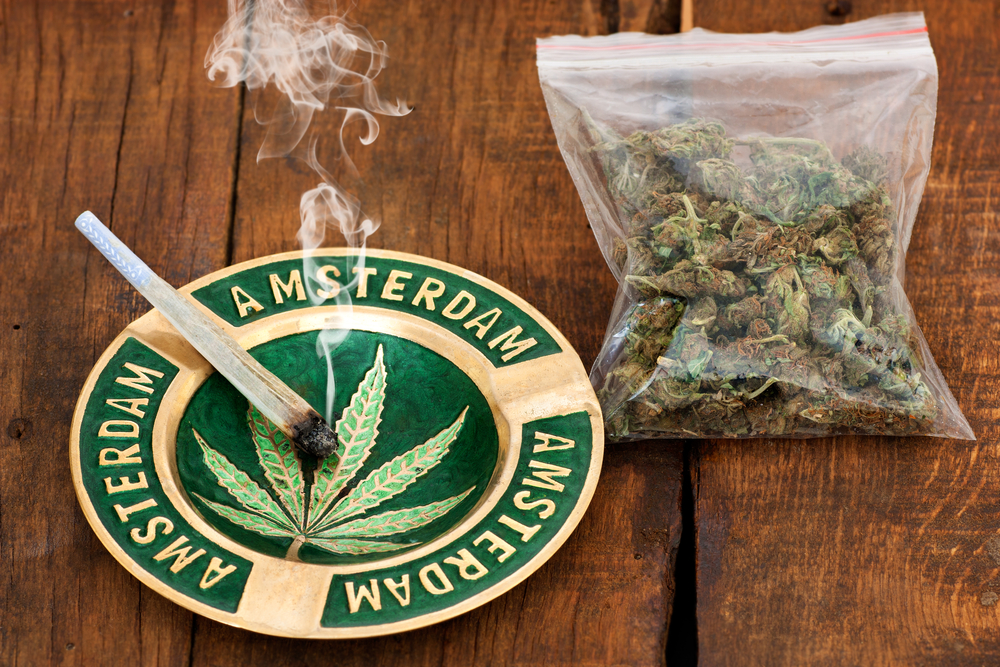
Smoking marijuana in Amsterdam

Photo from zambeza.com
by Gideon Lasco

Smoking marijuana in Amsterdam
by Gideon Lasco

AMSTERDAM - The distinctive aroma of cannabis is unmistakable, and there are parts of the city  center where, even with my eyes closed, I could tell that I’m in Amsterdam.

For four years now, I have kept coming back to this city for my graduate studies at the University of Amsterdam. Before our university moved further away from the city center, our department building was right at the red-light district, and when I had not yet mastered my way around the confusing streets and canals that look the same, I would sometimes end up in alleys where sex workers have their glass cubicles - or where coffee shops are suffused with the unerring vapor of the weed that is inexorably associated with the city itself.

As any local would point out, however, the monicker “Weed Capital of the World” is a misrepresentation of Amsterdam itself - a city that many of its residents love for its “small town” feel, and pragmatic sensibility. And while many in the city capitalize on its reputation by selling marijuana-themed souvenirs like cannabis leaf-shaped magnets, the Dutch government has actually introduced restrictions on marijuana use in recent years.

Yet it is still very acceptable to smoke cannabis here, and if I were to smoke a joint in Dam Square or the Museumplein - home of Van Gogh Museum and the Rijksmuseum - no one will notice, let alone arrest me. The city’s official website states that: “those aged 18 and above are permitted to smoke cannabis outside as long as doing so does not create nuisance to others.”

In one of his imaginative pieces in the Inquirer, Ambeth Ocampo interviews Jose Rizal, and gets the national hero to admit that he tried marijuana (a fact supported by Rizal’s own diary). If our national hero used marijuana, why couldn’t I?

***

Smoking weed, of course, has become morally and politically contentious in ways Rizal never anticipated (he, like many youths today, was most likely just “trying out stuff”). A series of legislations starting in the early 20th century turned marijuana into a forbidden substance, even as its very forbidden-ness increased its appeal (“Masarap ang bawal”). By 1972, following the US-led “War on Drugs”, the Dangerous Drugs Act (RA 6425) classified marijuana as a “prohibited drug” - making it even more forbidden than shabu.

Supporters of this drug regime justified these draconian measures by asserting that marijuana is “gateway” drug that could lead to “hard” drugs such as shabu and cocaine. Thereafter, the war on drugs was taken for granted as the righteous thing to do, and it was anathema to even question it. Politicians readily took up the cause, and Gloria Macapagal Arroyo even made the penalties harsher in 2002 with an amended Dangerous Drugs Law that imposes 12 - 20 years of jail time to anyone in possession of less than 300 grams of cannabis. In 2005, a man found in possession of two hand-rolled sticks of marijuana got sentenced to 15 years in prison.

The Dutch, on the other hand, took an entirely different approach, changing its policies on marijuana in 1976. Contrary to popular belief, they didn’t actually legalize marijuana (it’s still technically illegal until now), but they made a sharp distinction between “hard drugs” like methamphetamine and “soft drugs” like marijuana for which they pursued a policy of “non-prosecution”. Instead of looking at these drugs as a criminal problem, they saw them as a public health concern, and focused on reducing the harms associated with drug use. By permitting “coffee shops” to openly sell marijuana, for instance, Dutch policymakers felt that they were isolating users from dealers who would also be selling cocaine alongside marijuana. Importantly, they were not alienating drug users from society, welcoming them to avail of medical and rehabilitative services.

Forty years later, despite these policies, the lifetime drug use prevalence in the Netherlands is no more than that of neighboring countries, and it has the lowest rate of injecting drug use in Europe. Meanwhile, in the US where billions of dollars have been spent on a “War on Drugs”, states like Oregon and Colorado are beginning to legalize or decriminalize medical and recreational marijuana, following the Netherlands’ lead.

***

The Dutch context, of course, is very different: euthanasia, abortion, and same-sex marriage have been legal here for decades - and what has worked for them may or may not work for us, given our own sociocultural, demographic, and economic circumstances. The Dutch drug policy, moreover, is not without its problems and challenges - such as dealing with increasingly more potent varieties of cannabis, and the tenacious presence of an illegal drug trade.

Nonetheless, the Dutch experience on drugs should call into question the policies we have been unreflectingly following all these years. If, as a Mayo Clinic study demonstrated, marijuana poses less risk (9%) in developing dependence compared to “legal addictions” like nicotine (32%) and alcohol (15%), why impose such a heavy penalty for its users? If, as Canadian researchers have found, it is a safe and effective treatment for chronic pain relief, why ignore its potential health benefits?

We need an open and vigorous conversation about drugs. Not because someone like me can freely smoke marijuana in Amsterdam, but because many are smoking it in the Philippines, and they - along with those who seek its potential health benefits - are needlessly suffering the consequences of laws that don’t make sense.

Saturday, January 3, 2015

Drugs, supplements, and Universal Health Care

by Gideon Lasco, MD

Attaching the word "universal" to "health care" is far more difficult in real life than in paper, for it involves reconciling the oftentimes disparate interests of various stakeholders. This is where regulation comes in: it tries to balance these interests while ensuring quality health care that is safe, equitable, and affordable.

In the ongoing “Secretary's Cup”, a series of talks, debates, and town-hall meetings organized by the Department of Health and its partners, "regulation" is highlighted as one of the six building blocks of Universal Health Care (UHC).

One of the key themes in regulation is the management of health products or medicines. From antibiotics to vitamins, drugs are part of our everyday lives, and we see them as fundamental mediator of health and wellness in our bodies. In this article, we examine areas where regulation is most needed.

Generics and branded drugs
The prices of medicines in the Philippines rank among the highest in Asia. In response to increasing demand for cheaper medicines, the Philippines enacted laws in 1988 and 2008 promoting generics, and parallel importation of branded drugs.

The results have been mixed. Today, generic drugstores are ubiquitous, and government-run Botika ng Barangay outlets cater to many communities. On the other hand, many people continue to distrust generics. A significant number of doctors share the view that inasmuch as they want to support generics, they do not wish to entrust their patients' health on generics that they say are of doubtful efficacy.

This is where regulation comes in. With sufficient credibility, the Food and Drug Administration (FDA) can narrow the perception gap between branded and generic drugs with its pronouncements of safety and efficacy.

Meanwhile, Ponstan, a pain reliever, costs less than two pesos in India and almost 16 pesos in the Philippines. Bactrim, an antibiotic, costs just 56 centavos in India and P18.16 in the Philippines.

Drugs and food supplements
Another important regulatory concern involves “food supplements”. In theory, they are not drugs, freeing them from the stringent requirements for drug approval. But in practice, they are marketed as drugs and treatments for particular conditions, notwithstanding the obligatory disavowal that follows their TV advertisements: “No approved therapeutic claims”.

These supplements fulfill people's needs that are not dealt with or sanctioned by the medical establishment, such as skin whitening and weight loss. Other supplements also promise to treat conditions such as cancer, diabetes, heart disease, whose treatments would be far more expensive if availed of from conventional medicine.

There are serious issues of safety among these products. As 'non-drugs', the ingredients of these drugs have not been examined thoroughly. They may contain harmful ingredients, and at high doses, they might be toxic to the body, unbeknownst to their adherents. For instance, comfrey, an herbal supplement widely promoted in the 1990s, turned out to be potentially harmful to the liver.

Moreover, there is also the issue of opportunity cost: If a patient takes a supplement to treat his or her cancer instead of going for chemotherapy, and in doing so, forfeits the opportunity to avail of life-saving treatment, who is to blame? Ultimately, it is the government's responsibility to ensure that consumers make informed choices. It must examine the way these products are marketed. Therapeutic claims, explicit or implicit, must not be advertised unless validated.

Traditional and modern medicines
Related to supplements, there is a challenge of integrating (and regulating) traditional remedies, particularly herbal medicines. In the early 1990s, the DOH led by Dr. Juan Flavier embarked on a campaign to promote herbal medicines as remedies for common ailments such as cough, culminating in the promotion of the “Sampung Halamang Gamot” (Ten Medicinal Plants). Lagundi, one of the ten, has been well-researched and the University of the Philippines National Institutes of Health has endorsed its efficacy and safety as a cough remedy.

Traditional and modern medicines should be treated equally by regulators. Herbal medicines, despite their being “natural”, must be evaluated for possible side effects and toxicity. But as lagundi has demonstrated, it also has the potential to be at par with other medicines in terms of effectiveness, and thus, they need to be taken seriously. Considering our wealth of plants and healing traditions involving plants, further research is needed to validate their therapeutic (and economic) potential.

Conclusion: Medicine and medicines
In this article, we looked into dynamics of branded and generic drugs, drugs and 'supplements', as well as traditional and modern medicines. In managing these relationships, it is the responsibility of the regulators, such as the FDA, to protect the interest of consumers. Moreover, in the larger framework of health reforms, it is important to recognize that universal access to Medicine should always be accompanied with universal access to medicines that are safe, effective, and affordable.

Manila
September 14, 2012

REFERENCES

Pizaro, O (2011). “Review of the Cheaper Medicines Program of the Philippines”. Philippine Institute for Development Studies. Available at: http://www.dbm.gov.ph/wp-content/OPCCB/fpb/b_DOH-CheaperMedicines/i-Cheaper%20Medicines%20Program%20Review.pdf

Lizada (2007). Food Safety in the Philippines. USAID. Available at: http://www.scribd.com/doc/4938633/Food-Safety-in-the-Philippines-Problems-Issues-and-Opportunities-for-the-Small-Farmers-and-Produ